Ceramic Coating Maintenance: How to Wash and Protect It
Applying a ceramic coating is certainly one of the most effective methods to ensure the paint of your vehicle remains glossy and shielded. Moreover, in order for the ceramic coating…

Applying a ceramic coating is certainly one of the most effective methods to ensure the paint of your vehicle remains glossy and shielded. Moreover, in order for the ceramic coating to last longer and function correctly, frequent upkeep is an absolute necessity. The protective layer might get depleted with time, if not taken care of properly.
Maintenance of Ceramic Protection Will Be Helpful for the Performance of the Coating
Ceramic protection, after all, does create a strong barrier around your car’s paint but that doesn’t mean it won’t need care from time to time. Regular maintenance leads to:
- Longer lifespan for ceramic protection
- Continually high-gloss, smooth finishes
- Water-repellent action still strong
- No dirt, dust, and road grime getting accumulated
- Less need for polishing to be done often
The First 48 Hours After Application of Ceramic Protection
The first 48 hours are very crucial for the curing of the ceramic protection.
What You Should Do:
- No water on the car
- Under a roof or in a shadow
- No washing of the car
- Do not put your fingers on the paint unless necessary
What You Should Not Do:
- Rain exposure
- Wash the car
- Parking under trees
Proper curing results in the establishment of strong bond between ceramic coating and paint.
How the Car Should Be Washed After Ceramic Coating
The Gentle Washing Process Should Be Used
Always use a gentle washing method to protect the ceramic coating layer.
Recommended practices:
- Clean your car once every 1-2 weeks
- Use pH-balanced car shampoo for cleaning
- Wash with clean microfiber mitts
- Do not go for automatic car washes
The products which can be found at magicshield.shop are specially designed for use on the vehicles that have the ceramic coating done.
Correct Drying of the Car
Proper car drying after washing is a thing equally as important as washing itself.
- A soft microfiber towel should be used for drying the car
- Gently pat dry instead of rubbing
- Prevent water spots by avoiding air drying
This is a process that can help maintain the smoothness of the ceramic surface.
Avoid Using Harsh Chemicals and Abrasive Tools
Ceramic coating would be impaired by:
- Powerful detergents
- Acidic or alkaline solutions
- Coarse sponges
- Tough brushes
To strengthen the protective layer always use ceramic-safe car care products from magicshield.shop.
What to Do to Keep the Ceramic Protection Shine
To keep the shine looking new:
- Apply a ceramic booster spray every few months
- Bird droppings and bugs should be removed promptly
- Water spots should be cleaned as soon as they appear
Fulfilling the needs of care for ceramic protection would make it look new for a longer time.
Ceramic-Coated Cars Parking Guidelines
The place you park your car influences the durability of the ceramic coating.
Best parking spots:
Parking indoors, in a garage or under a shade
Avoid:
Long exposure to the sun
Parking under trees
Areas with a lot of dust
How Often Should Ceramic Protection Be Maintained?
| Maintenance Task | Frequency |
|---|---|
| Regular Wash | Every 1–2 weeks |
| Ceramic Booster | Every 3–4 months |
| Deep Clean | Every 6 months |
Common Mistakes to Avoid
- Washing too soon after application
- Using household detergents
- Skipping regular washes
- Ignoring bird droppings
- Using dirty microfiber towels
Avoiding these mistakes helps ceramic protection last longer.
FAQs:
1. How long does ceramic protection last with proper maintenance?
Ceramic protection can last several months to over a year with the right care and regular maintenance depending on usage and environment.
2. Can I use normal car shampoo on a ceramic-protected car?
Only pH-neutral car shampoos may be used. The ceramic layer can be harmed by strong cleaners.
3. Do I need waxing after ceramic protection?
No, waxing is not needed. The ceramic protection gives shine and protection.
4. Can ceramic protection be maintained at home?
Yes, cars with ceramic coating can be easily maintained at home with proper washing and care methods.
5. Is ceramic protection safe for daily-driven cars?
Certainly, ceramic protection is the best option for daily-driven cars when correctly maintained.u003cbru003e
Also Read:
Tire Shine Spray – Complete Guide for Deep Gloss & Tire Protection
Ceramic coating reduces how strongly dirt sticks, but it still needs regular, gentle cleaning. Good maintenance preserves gloss and helps the hydrophobic surface perform consistently.
Use a coating-safe wash routine
Wash every one to three weeks depending on weather and mileage. Use a pH-balanced shampoo, clean wash media and a separate wheel bucket. Rinse loose grit first and wash from the cleanest upper panels downward.
Dry without adding swirls
Use a clean, plush drying towel or filtered air. Do not let hard water dry on the surface because minerals can clog water behavior and leave visible spots.
Decontaminate and top up when needed
If water behavior weakens, use a coating-safe decontamination wash before assuming the coating has failed. Apply a compatible graphene or ceramic maintenance spray sparingly after cleaning.
Frequently asked questions
Can I use an automatic car wash?
Avoid brush washes because they can mar the finish. A careful hand wash is the safest option.
Can I wax over ceramic coating?
Traditional wax can mask coating behavior. Use a compatible ceramic or graphene topper instead.
How soon can I wash after coating?
Follow the coating instructions. Long-term coatings commonly need at least seven days before the first full wash.
Build the complete protection system
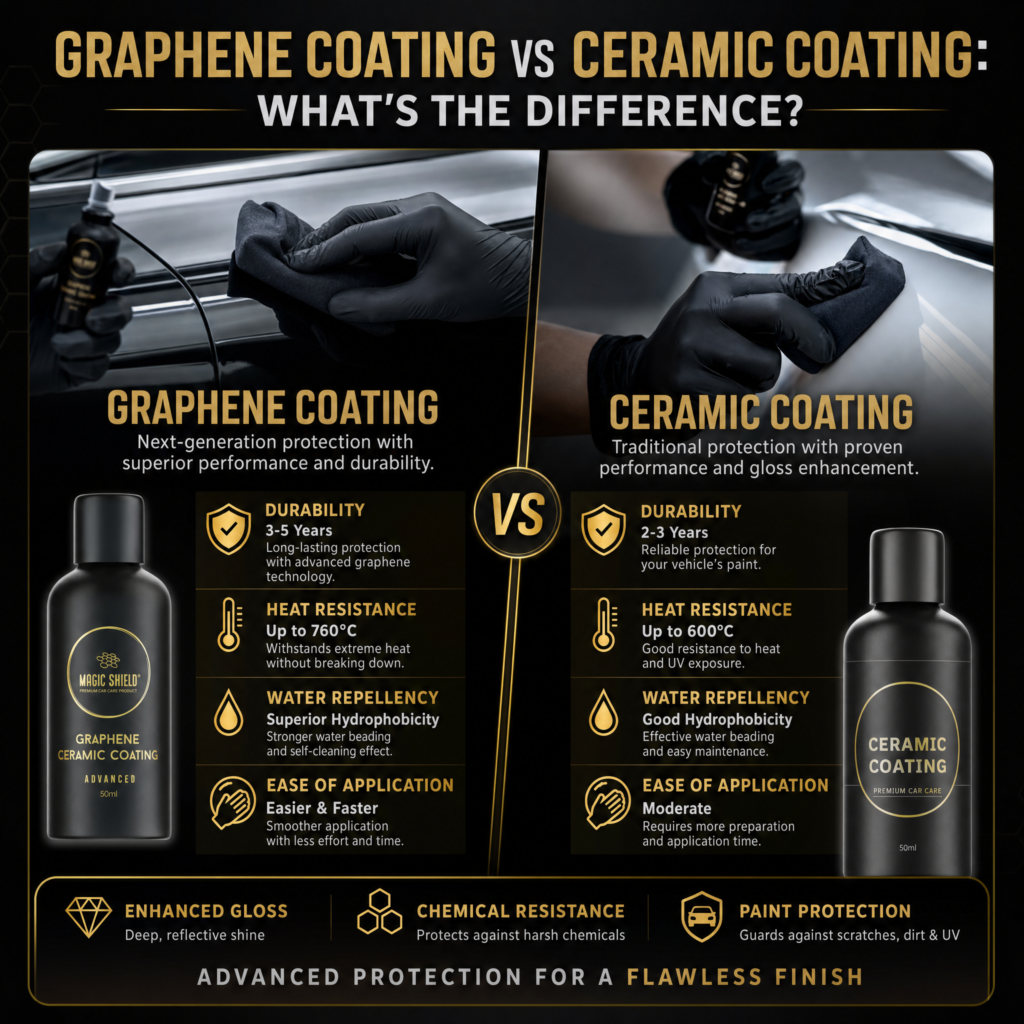
For reliable results, work through the full sequence: prepare the paint, choose a coating, and maintain the finish. For long-term protection, see the Magic Shield Graphene Ceramic Coating kit.
Continue your detailing plan: Graphene vs ceramic · How to apply ceramic coating · How long coatings last · Best coating for black cars · Coating preparation · Coating maintenance