How to Use a Clay Bar on a Car Safely: A Beginner’s Guide
What does a clay bar actually do ? A clay bar is a soft, pliable detailing tool, kinda like that step you do before everything else, it lifts embedded contaminants…
What does a clay bar actually do ?
A clay bar is a soft, pliable detailing tool, kinda like that step you do before everything else, it lifts embedded contaminants off your car’s paint. Basically, think of it as a fine grit magnet for all the little things a wash mitt just smooths over, like it never really happened.
When you slide a lubricated clay bar across the surface, it kind of grips onto tiny particles—road grime, tree sap, industrial fallout, overspray, and mineral deposits—how to use a clay bar on a car and then pulls them away from the paint without digging into the clear coat, as long as you use it correctly. Not aggressively, no press hard, and keep it slick.
And yeah, this is not the same as polishing or waxing. Clay bar work doesn’t really “add gloss” or erase scratches. Its entire job is decontamination only, so you end up with paint that feels glass smooth , and is way more ready for polish, sealant, or wax to bond in a proper way.
Signs Your Car Needs Clay Bar Treatment
Still wondering if your paint actually needs it? Here are the usual clues:
– The paint feels gritty, or a little bumpy when you run a clean hand over it after washing.
– Wax or sealant doesn’t last like it used to, or it beads in an uneven way.
– You can see small dark specks on lighter paint, especially after you parked under trees.
– The finish looks dull even right after you wash and dry it.
– It’s been several months since the last clay bar session (more on timing below).
If any of these sound familiar, how to use a clay bar on a car it’s a solid sign your paint could use a quick decontamination pass.
How to Use a Clay Bar on a Car Safely step-by-step
how to use a clay bar on a car this part is the one that really matters. Go in order, and try not to rush. If you skip any bit, you’ll probably regret it later.
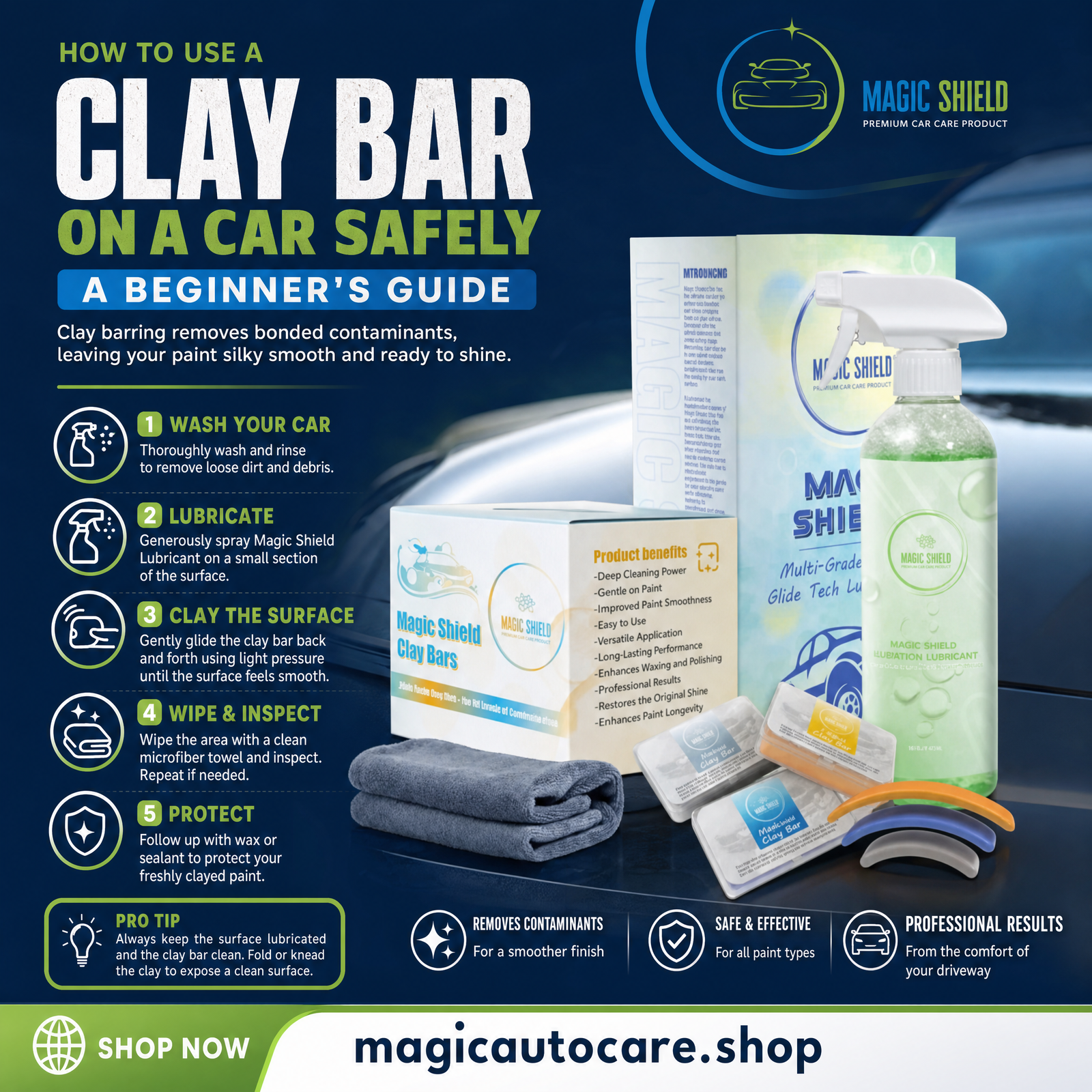
1. Wash the car really thoroughly first
Do not clay a dirty car. Any loose dirt, dust, little grit stuff that’s still on the paint will get carried around by the clay bar, and yes it can leave tiny scratches. So a proper wash, soap , rinse, dry… none of that is optional before you start.
2. Work in the shade, on a cool surface
Sunlight makes the lubricant quit faster and the paint can get warm, which is kinda not the plan when you’re claying. Pick a shady spot and touch the panel—make sure it isn’t hot how to use a clay bar on a car .
3. Split the clay bar into smaller pieces
Take the clay bar and cut it into two or three workable sections. Flatten one section into a disc that fits kinda in your palm. Smaller and flatter usually means better command , and you end up using less force on one area.
4. Spray lubricant on the surface
This part is critical. The clay bar should never meet a dry panel. Spray a good amount of clay bar lubricant onto a small section—something like about two feet by two feet is usually manageable.
The lubricant is doing two jobs: it helps the clay slide, instead of dragging, and it lifts away the grime and junk that’s stuck, so it floats out rather than rubbing against the paint.
5. Glide the clay across the paint
Use light pressure , keep it even. Move the clay bar back and forth in straight lines over the wet area. You should not have to push hard—let the clay handle the work. When it’s right, the surface changes from slightly rough, to nice and smooth as the contaminants get removed.
Try not to use circles, straight passes make it easier to how to use a clay bar on a car control and spot any tiny marring, so you can correct it before you go too far.
6. Check , then Fold the Clay Often
Every so often, just flip the clay over and look at the surface that was touching the paint. If it’s picked up some dirt and it looks kind of dull or packed with tiny bits ,how to use a clay bar on a car fold the clay over on itself so you get a cleaner area, then reshape it into a disc
Never keep going with a dirty patch. A contaminated face will scratch your paint instead of cleaning anything. If the whole piece gets heavily soiled and folding no longer gives you a good section , then stop and switch to a fresh piece.
7. Wipe Each Bit Right After
Once you finish claying a section, wipe away the leftover lubricant residue with a clean microfiber towel before you move on. This part is useful too because you can actually feel the paint, like checking it’s smooth.
8. Repeat, Section by Section
Go around the whole car one area at a time. Reapply lubricant that’s fresh for every new spot. Don’t skip re-lubricating just because the next area is close—dry claying how to use a clay bar on a car is probably one of the most common ways paint gets marred.
Common Mistakes to Avoid
Even something this “simple” how to use a clay bar on a car can go sideways if you’re rushing. Be careful with:
Claying a dry or dirty surface — always wash first, and keep the panel wet the whole time.
Dropping the clay bar on the ground and then using it again without checking — it’ll pick up grit and gouge your paint.
Using too much force — let the lubricant and the clay’s texture do the job, not your arm muscles.
Skipping the fold-and-check step — reusing a contaminated patch is one of the biggest reasons for those fine scratches.
Working in direct sun or intense heat — lubricant evaporates quickly, so friction and drag rise fast.
Using dish soap or household cleaners as a lubricant replacement — they don’t give the slickness you need to safeguard the paint.
What to Do After Clay Bar Treatment
Claying strips away contaminants, but it can also leave paint slightly more vulnerable to marring until it’s protected again. After finishing:
- Do a final wipe-down with a clean microfiber towel to remove any remaining lubricant residue.
- Inspect the paint under good lighting for any spots you may have missed.
- Apply a wax, sealant, or ceramic coating. Freshly clayed paint is perfectly smooth, which means these products bond more evenly and go on smoother than they would on contaminated paint.
- Store or dispose of the clay bar properly. If it’s still relatively clean, keep it in its container away from dust. If it’s heavily soiled, it’s not worth reusing.
This is a great point in the process to explore the broader range of car detailing for beginners solutions available — a good wax or paint sealant from MagicAutoCare.shop can help lock in that freshly-clayed smoothness.
Also Read:
Best Car Cleaning Products for Every Vehicle | Magic Auto Care
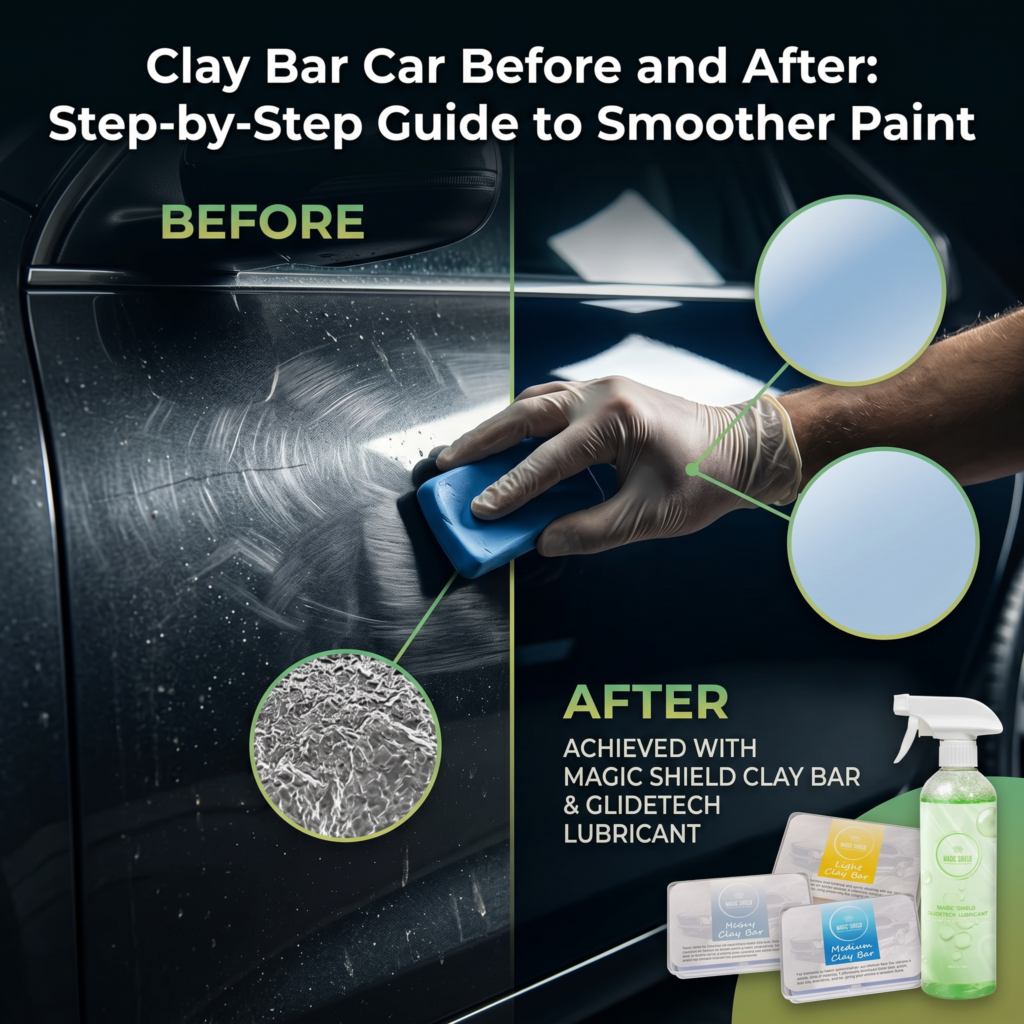
Clay Bar Car Before and After: Step-by-Step Guide to Smoother Paint
FAQs:
Q:Is clay bar treatment safe for all types of paint?
Ans:Clay bar treatment is sorta safe for most paint, but “safe for all types” is not really a blanket thing. It’s generally fine for clear coated finishes when you use enough lubrication and you keep the pressure really light, like almost gentle. But if it’s a classic car with single stage paint or some unusual finish, it’s better to look up the exact paint type first and not just wing it.
Q:Can I clay a brand new car?
Ans: Yes, you can. Even brand new cars can collect stuff during transport, delivery, or while sitting on the dealer lot. If the paint feels rough, or kind of “grabby” when you run a clean hand over it, claying can help.
Q:What if I clay without lubricant?
Ans:Don’t do that. Claying a dry surface basically creates unwanted friction and that can cause fine scratches, or light marring. Lubricant should be there before and during any contact between the clay and the paint so the clay glides.
Q:How do I tell if my clay bar is too dirty to keep using?
Ans: Fold it up and check. If you can’t find a clean section, or if it feels gritty and stiff instead of smooth, and flexible, then it’s time to replace it.