
Self Car Shampoo | Premium Car Wash | MagicShield
Discover why Self Car Shampoo is the safest way to wash your car. Compare pH neutral foam formulas, ingredients, and step-by-step tips from MagicShield.
PH NEUTRAL CAR SHAMPOO
7/12/20267 min read
Introduction
Most car owners have grabbed a bottle of dish soap or an all-purpose cleaner in a pinch, scrubbed their car, and then just walked away thinking the whole thing was finished. It wasn't, not really. Dish soap strips wax, dulls clear coat, and over time it slowly eats away at the protective layers your paint depends on. Thats exactly why self car shampoo exists — a kind of car specific cleaning product engineered to lift grime, road dust, and annoying contaminants without messing up paint, trim, or other protective finishes.
If you've ever searched for the best self car shampoo, wondered what makes a premium car wash soap different from generic cleaners or asked whether pH neutral car shampoo is worth the extra cost, this guide covers all of it. We’ll go over the science, the ingredients, a step by step washing process, and the little errors that quietly ruin paint results over time — also where a brand like MagicShield fits into a smarter at home detailing routine.
Whether you're a weekend detailer or someone who just wants the vehicle to look like a showroom photo between professional visits, understanding how car wash shampoo actually works will change how you clean your car for good.
Benefits of Premium Car Wash Shampoo
A premium car wash shampoo isn’t just marketing talk — it’s honestly a different formulation, like, you can feel it in how it behaves. Here’s the part you actually notice:
Paint-safe cleaning power — it lifts brake dust, pollen , tree sap, and road film without needing that abrasive, hard scrub thing
Longer-lasting wax and coating protection — pH neutral blends help stop sealants from getting worn down every single wash
Rich, clinging foam — thick foam car shampoo keeps grime floating away from the surface, so you scratch less, basically
Streak-free, spot-free rinse — glass , chrome, and plastic trim don’t end up cloudy or marked after the water sheets off
Multi-surface compatibility — it stays safe on paint, vinyl wraps, plastic trim, wheels, and glass too
Pleasant, non-harsh scent — unlike industrial degreasers, car shampoo types are made for repeated hand contact, not just “wipe and go”
Concentrated formula — you use a small amount and still get a full bucket of useful suds, so the cost per wash drops over time
If you’ve spent money on ceramic coating, paint protection film, or even just did a fresh wax job, then using anything that isn’t a dedicated car wash soap kinda reverses the win, one wash at a time.
Key Ingredients That Protect Vehicle Paint
So, the key ingredients that protect vehicle paint are kind of the whole story behind why one auto detailing shampoo works way better than another. If you take a quick look at the bottle, you can usually spot what’s going on inside, even if the marketing is a bit loud. What you want to find on the label is basically this stuff :
1. Anionic and Non-Ionic Surfactants
These are the cleaning agents, they lift dirt and oil off the surface without being too aggressive, like they don’t try to rip away your wax. Non-ionic surfactants are often the calmer option, they tend to be used in coating-safe formulas.
2. pH Buffering Agents
These keep the wash at a more neutral pH, even when the shampoo has already mixed with dirty water , and all that road grime. Otherwise the acidity can shift and that can mess with how safely the paint is treated.
3. Lubricating Polymers
Think of these as slick lubricants, film-forming little helpers that reduce friction between the wash mitt and the clear coat. Less friction, less chance of tiny hairline scuffs. Micro-scratches can happen when contact is too dry or too grabby.
4. Foam Boosters
Some ingredients are basically there to build dense foam that lasts longer. The thick suds is not only visual, it also cushions the dirt particles, so they stay suspended rather than being dragged along the paint.
5. Water Softening Agents
These make the shampoo act more consistently whether your tap water is hard or soft. Hard water minerals can cause spotting, and you don’t want that showing up right after the rinse.
6. Gloss Enhancers
A few formulas add things that form a temporary, water-repelling layer. That can boost shine and help water bead up nicely immediately after the wash, so the finish looks extra crisp.
When you compare car cleaning products, these six categories are what usually separate a basic soap, from a genuinely paint-safe formula, even if both bottles say “safe for all finishes” or whatever.
How to Use Self Car Shampoo Step by Step (kinda)
Getting the most out of any vehicle wash soap is mostly about technique , not just the product quality. If you do it right, you’ll see way less marring and more shine. Try this:
Step 1: Pre-Rinse the vehicle
Grab a hose or pressure washer and take off loose mud, dust , and grit first. Do this before you touch the paint at all. Honestly, this one move stops a big chunk of swirl marks.
Step 2: Use the two-bucket plan
Set up one bucket with your diluted shampoo mix , and a second bucket with clean rinse water. Load your wash mitt with soap, then rinse the mitt in the clean bucket before you go back to soap again. It helps keep grime particles out of your “good soap” bucket.
Step 3: Dilute it the right way
Check the dilution ratio on the label. If it’s too strong, you’re wasting product. If it’s too weak, you lose lubrication and cleaning strength. Most foam car shampoo formulas are made for a specific ratio, especially if you’re using a foam cannon or a wash bucket.
Step 4: Wash from top down
Start at the roof and windows, then hit the hood, doors, and save the lower panels and wheels for last. Lower areas usually have the most stubborn grime , plus brake dust and road film.
Step 5: Go with straight-line strokes
Skip the circular scrubbing. Use straight, front-to-back motions instead. Dirt tends to move that way on the vehicle , and the scratches (if any) are less noticeable.
Step 6: Rinse often
Rinse each section before the shampoo starts to dry. Once it dries, it can leave spots and streaky marks, even if the product is good.
Step 7: Dry it using microfiber, or a blower
Use a plush microfiber drying towel or a proper car dryer/blower. Don’t use regular bath towels, they’re more likely to create tiny scratches .
Step 8: Optional finishing touch
If you want, use a quick detailer spray or a sealant after drying. It can boost gloss and add a short-term protection layer, so the finish stays cleaner longer.
Professional Car Washing Tips
A lot of detailers, who do car cleaning for a living, seem to follow this bunch of small habits most casual owners just skip, or they forget halfway through. Like, you think you’re fine then suddenly the whole thing turns into streaks and frustration.
Wash in the shade, or when the surface is cool. If it’s direct sunlight, the shampoo and water dry way too fast, and you end up with those stubborn spots. Also never wash a hot car. The heat makes evaporation happen faster and that alone raises the odds of streaking.
Use separate wash mitts for wheels and paint, because brake dust is abrasive. If the same mitt touches both areas, you can basically scratch the clear coat without even noticing. Then inspect your wash mitt pretty regularly. If there’s embedded grit in it, that “cleaning tool” turns into a rubbing tool instead.
After every few washes, apply a spray wax or sealant. It helps keep the hydrophobic, water-repelling behavior and future washes feel easier, less clingy. And don’t just let the car air-dry. Air-drying causes water spotting from mineral buildup; always towel dry.
One more thing, wash regularly, not only when it looks visibly gross. Things like tree sap and bird droppings turn into bigger problems the longer they sit.
These little habits, plus a good professional car shampoo, become the basic paint care formula that helps a vehicle stay looking fresh for years.
Why choose MagicShield Self Car Shampoo
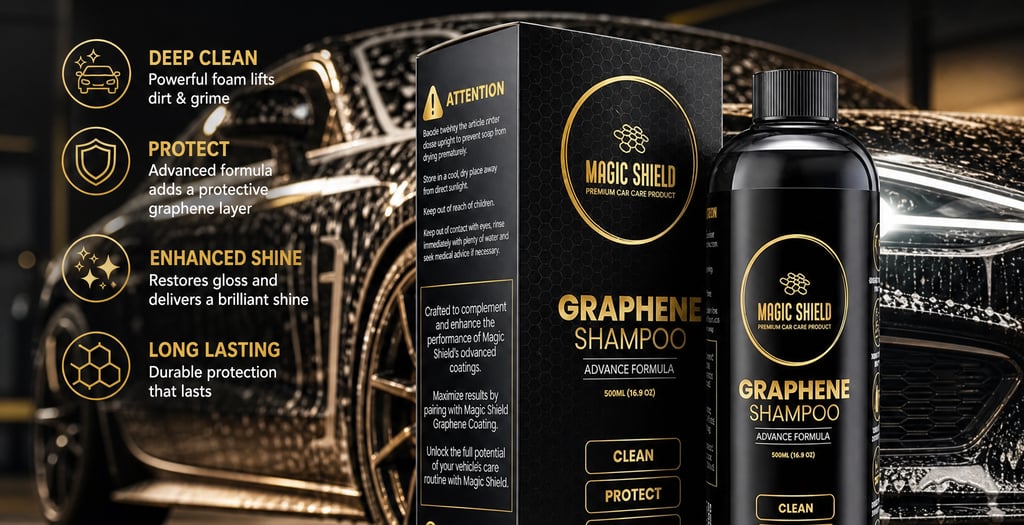
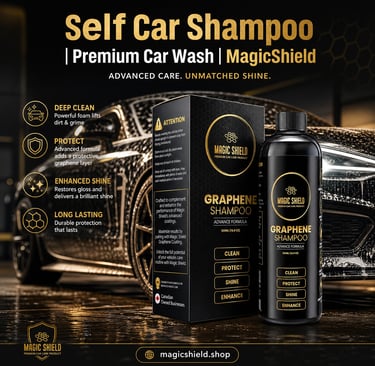
MagicShield is kind of built on one basic idea, a car wash product should do the job , clean well , but still not mess with the paint , wax, or whatever protective coating is under all that. MagicShield Self Car Shampoo is made as a pH neutral , high foam solution, meant for regular home use—so whether you’re keeping up a factory finish, or dealing with a brand-new ceramic coating, or even running a paint protection film wrap, it’s supposed to work.
So what makes it different :
pH neutral formula, gentle on wax, sealants, and ceramic coatings
thick, clinging foam that helps lift road dust and grime without needing harsh scrubbing
concentrated setup, just a little amount goes far , so cost per wash stays low
streak-free and spot-free rinse on paint, glass, and chrome
safe across multiple surfaces, including plastic trim and wheels
pleasant scent and a comfortable hand feel, which makes it easier to use a lot
MagicShield’s whole approach kinda lines up with what detailing pros usually swear by: balanced pH, real lubricity, and a chemistry that respects the protection layers already on your vehicle. For drivers who want that premium car-wash look, but don’t want to stop at a detailing shop every single week , this is designed to slide right into a simple, repeatable at-home washing routine
Check out the full range of formulas and bundles at MagicShield.
Frequently asked questions
1. What is self car shampoo, and how is it different from regular soap?
Self car shampoo is basically a pH-balanced cleaning product made for car paint, and yeah it is different from regular soap . Compared with dish or hand soap, it usually will not strip wax sealants, or ceramic coatings. It often has extra lubricating agents too, so when you wash by hand , it helps reduce marring on the surface.
2. Is pH neutral car shampoo really necessary?
Soaps that are too alkaline or too acidic can slowly wear down the clear coat and also weaken wax protection . With a pH neutral formula you still get a clean finish, but the protective layers stay more intact even after many washes.
3. Can I use dish soap instead of car shampoo?
I would not, no. Dish soap is made to cut grease in a more aggressive way, and that same strength can strip automotive wax, plus it may dull the clear coat if you keep using it over time.
4. How often should I wash my car with self car shampoo?
Most cars do well with washing about every one to two weeks. But if your car is out in road salt, tree sap, or heavy grime daily or often, then you may need to wash more frequently just to stop buildup before it sets in.
5. What's the correct dilution ratio for foam car shampoo?
It depends on the product though. A lot of concentrates suggest a small amount like 1–2 ounces per gallon of water, in a bucket. Foam cannon use can be different, with its own ratio, so follow the instructions on the label.
6. Does car wash shampoo remove wax or ceramic coating?
A good pH neutral car shampoo is made to avoid removing those protective layers. Harsh detergents, or dish soap type cleaners, can degrade wax and coating faster with repeated washing.
Help
Questions? Reach out anytime, we're here.
Links
Subscribe for latest offers
info@magicautocare.shop
© 2026. All rights reserved.
Contact Us